Learning & reflection
Organize Your Hajj and Umrah Preparation Checklist
A Hajj and Umrah preparation checklist in four parts: learn the rites with qualified guidance, verify trip rules on Nusuk, organize logistics, test your phone.
Editorial writing date:
Split your preparation into four parts: learning the rites, checking official trip arrangements, organizing travel logistics, and preparing your phone. Each part has a different source. Rites are learned from qualified teachers. Trip rules come from official Nusuk channels and your authorized organizer. A checklist helps you find the right source for each question. Ticking every box does not mean a rite has been performed correctly.
Key Takeaways
- Keep four parts apart: rites, official arrangements, logistics and phone.
- Learn the rites for your planned journey with a qualified teacher or group guide.
- Check current trip rules through official Nusuk channels and your organizer.
- Mark an item done only when you know its source.
The four parts of a Hajj and Umrah checklist
Each part answers a different kind of question. A lesson on a rite does not tell you whether you are eligible to book. A booking confirmation does not answer a question about your worship.
| Part | Example question | Where the answer comes from |
|---|---|---|
| Learning the rites | What does my planned pilgrimage involve? | A qualified teacher or your group's religious guide |
| Official arrangements | What process applies to my trip this season? | Official Nusuk channels and your authorized organizer |
| Travel logistics | Where do I need to be, and whom do I call? | Your confirmed itinerary and organizer |
| Phone preparation | Can I open my materials when I need them? | Your own device check |
These parts sort questions; they are not an itinerary or a list of legal requirements.
Part 1: Learn the rites with qualified guidance
The Quran addresses both journeys in Al-Baqarah 2:196, which opens, in Dr. Mustafa Khattab's The Clear Quran on Quran.com: "Complete the pilgrimage and minor pilgrimage for Allah." The verse goes on to cover situations such as being prevented from completing the rites, or falling ill. Those details need a teacher's explanation. A checklist cannot apply them to your situation.
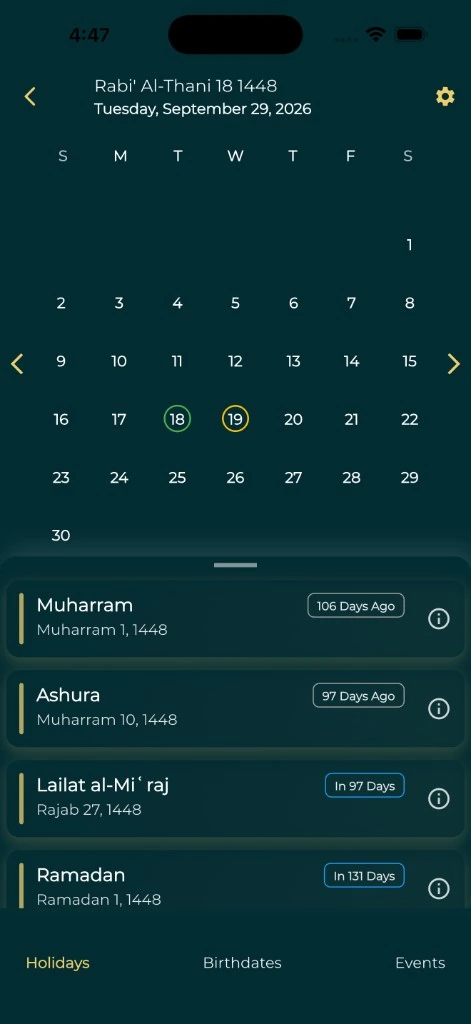
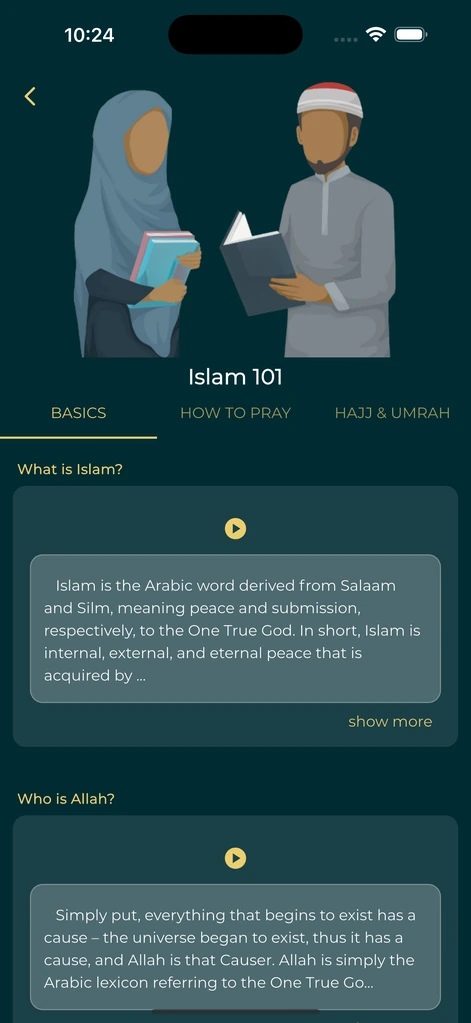
Start with an overview so you know the main stages and can ask specific questions. In the Everyday Muslim app, the Hajj & Umrah tab in Islam 101 has step-by-step guides, key duas and a pre-journey preparations checklist. The website's Hajj and Umrah feature page describes that tab, recommends leaving time for questions with a qualified teacher or group guide, and says a guide alone does not cover every circumstance. Use the app's checklist for the journey itself and this list to track where each answer comes from.
An overview helps you turn "I need to learn Hajj" into questions a teacher can answer. These prompts are questions, not answers:
- Which type of pilgrimage am I making? For Hajj, is it Tamattu, Qiran or Ifrad, and why?
- Where is my miqat on this route, and when do I enter Ihram?
- Which Ihram restrictions apply to me, and what should I do if I break one by mistake?
- What are the main stages, in order, for my journey?
- Does anything about my health, age or travel plans change what I should do?
In your notes, put anything copied from a lesson or dua in quotation marks with its source, such as the lesson title. Write your own reminders on a separate line that starts "My note:". "My note: ask my guide about this stage of our route" is a good open question. Do not rewrite it as an instruction until your teacher has answered it.
Part 2: Verify official arrangements on Nusuk
For Umrah, the Nusuk Umrah platform describes itself as operating "Under the supervision of the Ministry of Hajj and Umrah." It lists packages from authorized service providers. For Hajj, the Nusuk Hajj help page lists support channels, including live chat, email and a call center.
That help page also explains how to spot an official site. It says official Saudi website links "end with .sa" and use HTTPS. Check the address before you enter any details, especially if you reached the site from a social-media link.
Rules can change by country, season and type of trip. Visa rules, permits, booking deadlines and health requirements come from those official channels and your organizer, not from a study list. An old screenshot or another traveler's story is not proof of what applies to you. Mark such items "waiting for official answer" until you have one.
Part 3: Keep travel logistics in one place
Keep your confirmed itinerary, your organizer's contact details and your group's meeting points in one note. Keep private documents out of your general study notes unless you need them there.
Two practical additions help when plans change:
- Save the official support channels before you leave. For Hajj, the Nusuk Hajj help page lists a call center it describes as available 24/7, plus live chat and email. Add the ones that apply to your trip, and your organizer's number, to your phone's contacts.
- Keep an offline copy. A screenshot or printout of the itinerary, hotel address and organizer's number still works if mobile data does not. Date it.
Pilgrimage is tied to the lunar calendar. Al-Baqarah 2:189, in the same Clear Quran translation, describes the phases of the moon as "a means for people to determine time and pilgrimage." Local Hijri dates can differ between communities, and the guide to Hijri calendars and local dates explains why. For your trip, follow the dates your organizer gives you.
Part 4: Prepare and test your phone
Make the lessons and duas you plan to use easy to reach. Check text size and bookmarks. Then turn on airplane mode and try to open each item. Turn your connection back on afterward.
A downloaded passage working offline does not mean everything works offline. The Hajj and Umrah feature page itself says it does not promise complete offline access. The offline trip guide walks through what to test. The phone travel checklist covers prayer times and destination notes.
For duas you want to keep, the personal dua collection guide shows how to save the wording with its source.
Your Hajj and Umrah learning checklist
Copy this list into your notes and tick each item when it is true. Each item ends with where its answer should come from.
Learning the rites
- I know which journey I am preparing for: Hajj, Umrah, or both. (organizer and teacher)
- I have worked through an overview of the stages. (lesson or teacher)
- I know my pilgrimage type, my miqat and the Ihram restrictions that apply to me. (teacher)
- I have written my questions down, with the stage each one relates to. (my notes)
- A qualified teacher or group guide has answered each question. (teacher)
- My notes show the teacher's answer next to the original question. (my notes)
Official arrangements
- I have checked the current process for my country and season. (Nusuk and organizer)
- I have confirmed the site address ends in .sa before entering details. (Nusuk help page)
- Every rule I am relying on has a current official source, not a screenshot. (Nusuk and organizer)
- Open items are marked "waiting for official answer." (my notes)
Travel logistics
- My itinerary is confirmed and saved in one place. (organizer)
- I know whom to call, and how, if plans change. (organizer and official support channels)
- An offline copy of the itinerary and key numbers is saved and dated. (my own check)
- Our group knows which note is the current one. (group)
Phone preparation
- I have opened each lesson and dua in airplane mode. (my own test)
- Prayer times and Qibla settings are checked for the destination. (app settings)
- I have a place to record updates while traveling. (my notes)
A worked example: a family of four
Illustration only. This family is invented to show how the checklist can be shared.
Four relatives are traveling for Umrah with an authorized organizer. They split the work:
- Khadija keeps the logistics note: the itinerary, the organizer's phone number and the hotel address.
- Omar collects learning questions from everyone in one list, each tagged with a stage.
- Each traveler tests their own phone in airplane mode.
- The whole family agrees that Khadija's note is the only current logistics note.
One aunt asks whether a detail applies to her because of a health condition. Omar does not guess. He marks it "ask group guide" and the aunt asks the guide herself, since the answer depends on her situation.
Two weeks before the trip, the organizer changes a meeting time. Khadija updates the logistics note and tells the group. The learning questions do not change, because the update was about travel, not the rites.
Sharing tasks does not mean every traveler can hand every task to someone else. Logistics can be shared, but each pilgrim still needs their own questions about the rites answered for their own situation.
Review the checklist before you rely on it
Look for three warning signs:
- An item marked done with no source.
- A rule backed only by an old screenshot.
- A lesson nobody has actually opened.
Fix each one through the right channel. Use the weekly learning routine to set aside time for teacher questions before you leave.