Prayer & daily life
How to Plan Prayer Breaks Around a Workday
Plan prayer breaks with current local times, a suitable space, clear work handovers, and calendar checks that fit meetings, commuting, and remote work.
Editorial writing date:
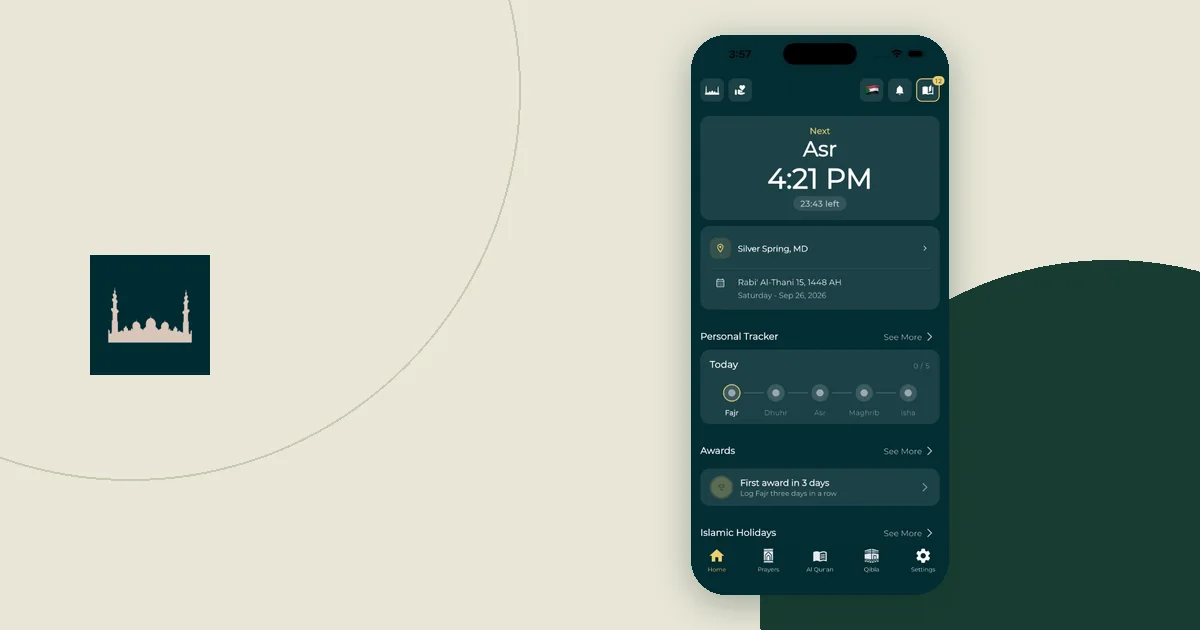
Plan a prayer break by bringing together the current local timetable, a place to pray, and a clear arrangement for your work. The hard part is often the transition: leaving a meeting, handing over a task, reaching a room, and coming back without a rushed conversation.
Start before a conflict appears. An-Nisa 4:103 connects prayer with appointed times, so the timetable you follow is the starting point for your work calendar. The steps below are about practical coordination. They are not legal advice about workplace rights, and they are not religious rulings for unusual situations.
Key Takeaways
- Check your prayer timetable against the meetings, travel and commute that overlap it.
- Agree cover, room access, washing facilities and how you signal a break.
- Arrange Friday's longer break for Jumu'ah well in advance.
- Recheck recurring calendar blocks when prayer times or work patterns change.
Check the timetable before moving meetings
Use the correct city, date and settings when you check prayer times. If you plan to pray at a mosque, confirm its congregation times separately. Avoid choosing a break just because it suited you last month.
Compare the timetable with meetings, travel between sites, customer appointments, and tasks that need constant cover. Start with the moments when you cannot step away on your own. A desk task is easy to pause; a shared handover needs a conversation.
When a scheduling conflict raises a religious question, note the actual circumstances and ask a qualified teacher. Give them the details rather than relying on an app setting or a colleague's situation. Keep the work question separate: what can you arrange at work now?
Make a clear, practical request
Explain what would help and how the work will be covered. A simple request could be: "I need a short prayer break in the afternoon. Can we agree how I hand over this task, and which quiet space I can use?"
The exact arrangement depends on your role and workplace, so check your staff handbook or speak to the right manager. Some official bodies publish general guidance:
- In the UK, Acas guidance on preventing religion or belief discrimination tells employers that people "might want to pray several times a day." It suggests being flexible, for example with a shorter lunch break to allow other breaks. It also says employers do not need a dedicated prayer room but should consider a suitable space.
- In the United States, the EEOC's religious discrimination page says employers must reasonably accommodate an employee's religious beliefs or practices unless that would cause undue hardship. It lists flexible scheduling and voluntary shift swaps as examples.
These pages describe general positions in one country each. For your own case, speak to HR, a union representative or a qualified adviser.
Useful details to settle include:
- Who needs to know when you step away.
- Whether a colleague must take over a task.
- How to find a free room and get access to it.
- Where to keep personal items such as a prayer mat.
- What to do if the room is unexpectedly in use.
You can keep the conversation specific without sharing a private worship record. Colleagues need to know the arrangement that affects their work, not your prayer history.
Check the space and the washing facilities
Visit the space before you need it. Check whether it needs booking, whether it is free at the times that matter, and whether it is quiet enough. If you will pray in a general meeting room, ask whether you can store a mat nearby.
Then look at where you will make wudu. A busy shared washroom at lunchtime is a different arrangement from a quiet one on another floor. Useful questions include:
- Which washroom is closest to the prayer space?
- Is there a sink you can use without blocking a queue?
- Where can you keep a small towel?
- Who should you ask if a facility is out of order?
Leave shared sinks and floors dry and tidy. That small habit keeps the arrangement easy for everyone who shares the room. If facilities are a real barrier, raise it with the facilities team or your manager as a practical request.
Plan Friday's longer break for Jumu'ah
Friday needs its own plan. The Quran calls believers to the Friday prayer in Al-Jumu'ah 62:9, and for many people that means travelling to a mosque during working hours. Questions about who must attend, or what to do if you cannot, belong with a qualified teacher.
The practical work is in the timing:
- Find the mosque's published Friday times. Check them each month in case they have changed, rather than relying on memory.
- Add travel both ways, time for wudu, and time to get back to your desk.
- Ask for that longer break in advance, not on Friday morning. You might offer to start earlier, take a shorter lunch on other days, or make up the time later.
- Agree cover for anything that cannot wait, and move Friday meetings away from that window where you can.
If several colleagues attend the same mosque, agree together how cover will work. A mosque near the office can shorten the trip, and the nearby mosque finder can help you shortlist options before you ask for a set break.
Plan around the commute and travel between sites
A prayer may fall during your commute, and which one can change as the seasons move prayer times. Decide in advance whether you will pray before leaving, at work, or once you arrive. If a prayer often lands mid-journey, ask a qualified teacher how it applies to your situation rather than guessing.
For someone moving between sites, the route matters too. A calendar block does not tell you whether you can reach a suitable room from a client's office. Use the daily salah routine guide to map where you expect to be at each prayer.
A remote worker needs the same thought, though the arrangement may be simpler. Tell the right person when you are briefly away if your work depends on fast replies. Set up your space before a long run of calls.
Keep recurring blocks under review
A repeating calendar event works well for a weekly planning session. Google's recurring event instructions explain how to set a repeat pattern and choose which events an edit affects. Check that choice carefully when you change a series.
Prayer times move through the year, so a repeating clock time will drift out of line. Instead, repeat a planning reminder, then update that week's break blocks from the actual timetable. Mark a block as tentative while you confirm the details.
If colleagues work in another country, check the event's time zone. Google Calendar shows events in local time, so a colleague abroad may see a different clock time for your break. Agree on the arrangement that applies where you are.
Work through an example before the busy day
This is an illustration. Picture an employee with a client call, an afternoon task that needs cover, a shared quiet room, and a Friday mosque trip. No clock times are given, because the local timetable must supply them.
| Planning question | Useful action |
|---|---|
| Does the call overlap the intended break? | Suggest another meeting slot before accepting it. |
| Can the task be left unattended? | Agree a named handover and a time to return. |
| Is the room booked? | Check availability and name a second space. |
| Is there somewhere to make wudu? | Find the nearest suitable washroom in advance. |
| Is it Friday? | Confirm the longer break and cover earlier in the week. |
| Has the break moved this week? | Update the calendar and tell anyone affected. |
This works better than a vague "busy" block that everyone is left to interpret. If your hours change often, see the guide to planning salah around changing shifts.
Repair the arrangement when it fails
After a difficult day, find which part broke. A room problem, a notification problem and an unclear handover need different fixes. Write the detail down while it is fresh.
"I had no cover" points to a conversation about responsibilities. "I didn't see the reminder" calls for a notification check. More calendar alerts will not unlock a room or arrange cover.
Your next step: open next week's calendar, find the two breaks most likely to clash with work, including Friday, and send your manager one short message proposing how each will be covered.