Quran & learning
A Beginner Plan for Memorizing a Short Surah
Memorize a first short surah in small steps: check your reading with a teacher, practice one verse at a time, join the verses and plan early reviews.
Editorial writing date:

To memorize a first short surah, pick one passage with your teacher, check that you can read it correctly, then learn it one verse (ayah) at a time. Join the verses together, and put the first reviews in your calendar before you start anything new.
If reading Arabic is still hard for you, ask your teacher what to work on first. Getting the sounds right matters more than finishing quickly.
Key Takeaways
- Choose one short surah with your teacher and write down its exact verse range.
- Check your reading with a qualified teacher before you practice alone.
- Learn one verse at a time, then practice how the verses join.
- Plan short reviews on later days before adding a new surah.
The five steps at a glance
- Choose one short surah and write down its name and verse range.
- Check your reading with a teacher before practicing alone.
- Practice one verse at a time with the text open.
- Join the verses and recite the surah from the start.
- Review on later days, and keep a short note of what to fix.
Step 1: Choose one short surah
Ask your teacher which surah suits your reading right now. Length is only part of the choice. Sounds you find difficult, and words you already know, matter too.
Write the task in exact terms, such as "Surah Al-Ikhlas (112), verses 1–4." A goal like "learn some Quran" gives you nothing to open. A surah name and verse range does.
Check the verse count before you plan around it. Quran.com's information page for Al-Ikhlas lists 4 verses, and also notes that some counting traditions give 5. If your mushaf numbers the verses differently, follow the one your teacher uses.
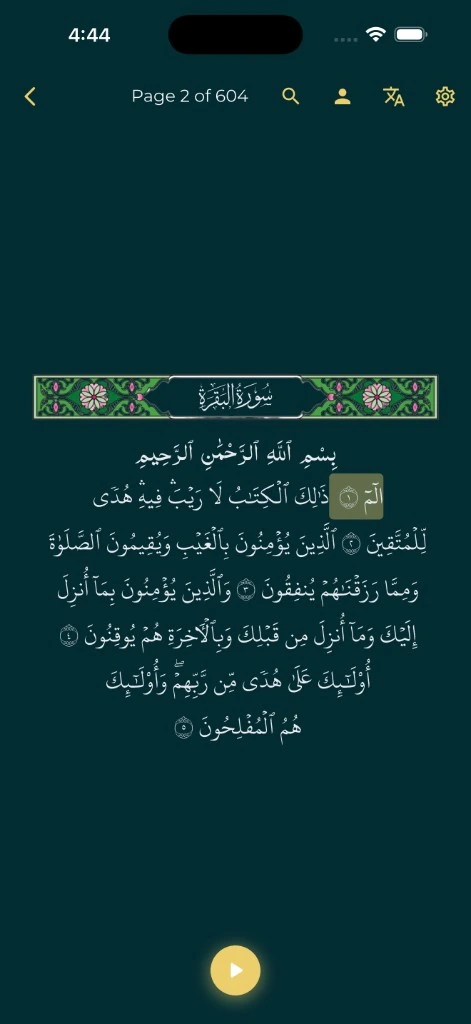
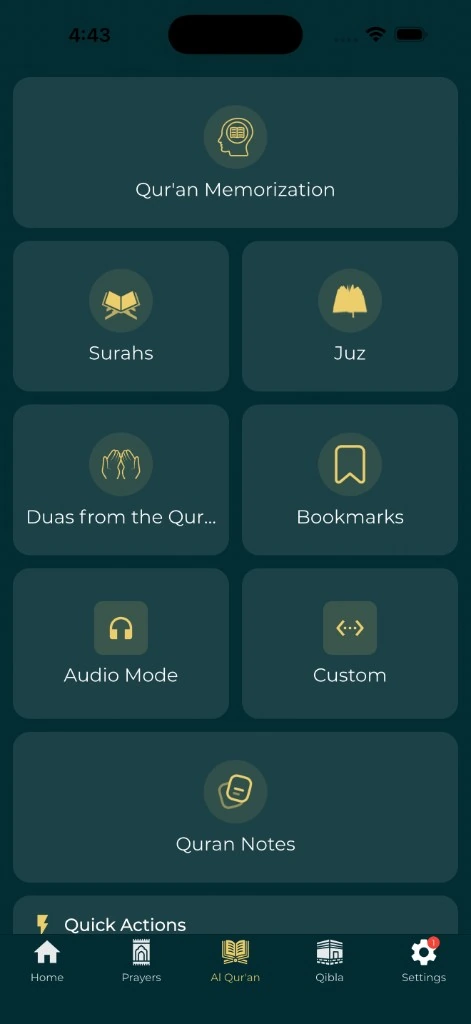
The Everyday Muslim Quran memorization tools let you choose a surah or individual verses, repeat the recitation and mark what you have memorized. That record shows what you marked. It does not test whether your recitation is correct.
Step 2: Check your reading with a teacher
Read the surah while following the Arabic text. Then listen to the recitation your teacher recommends. Use the same text and the same reciter each time, so you are not searching for clips when you should be practicing.
Mark any word you cannot say with confidence. Ask your teacher to show you the sound. Do not invent your own English spelling for it.
Quran 73:4 includes the instruction to recite the Quran in a measured way. A practical way to reflect that in a study plan is to leave time in each session to hear yourself and fix mistakes, rather than chasing speed.
Checking matters even in structured programs. Quran.com's Al-Mulk learning plan says it focuses on memorization and meaning, not formal tajwid teaching. It encourages learners to review their recitation with someone knowledgeable.
When your teacher corrects you, write it down with the verse number. A note such as "112:2 – ask about the first letter" is something you can act on. "Pronunciation bad" is not.
Step 3: Practice one verse at a time
Work on the amount your teacher thinks you can say accurately. For a short surah, that is often one verse. Do not cut a verse at a random point just to make equal pieces.
Each practice round can follow the same order:
- Read the verse from the text.
- Listen to the model recitation while following along.
- Look away and try the verse.
- Check your attempt against the text and your teacher's notes.
- Mark anything you are unsure of to ask about next lesson.
This is a study routine, not a religious practice with a set number of repeats. Keep the text close, so you can check yourself straight away instead of practicing a mistake.
The app's Memorization Settings include an Ayah Repeat Count from 1 to 15 and an Ayah Delay between verses: none, 3, 5 or 10 seconds, or Ayah Length, a pause as long as the verse just played. A pause gives you a moment to say the verse yourself before the next one plays. For a separate listening routine, see the guide to pairing Quran listening with a reading session.
Step 4: Join the verses together
Knowing each verse alone is not the same as reciting the surah in order. Once two verses feel familiar, practice saying them one after the other. Then add the next verse to the chain.
Picture this problem. A learner can say each verse when given its first word, but loses the order when starting from the beginning. The fix is usually not more new text. It is a few rounds on the join that keeps breaking.
Tell your teacher where the join slips. Keep a small record like this:
| Field | Example entry |
|---|---|
| Passage | Al-Ikhlas, 112:1–4 |
| Current task | Join verse 2 to verse 3 |
| Correction | Teacher's note on 112:2 |
| Next check | Recite 112:1–4 at the next lesson |
Avoid labels like "mastered." Write what you checked and when.
Step 5: Plan reviews on later days
Come back to the surah on later days, not only in the session where you learned it. A U.S. Department of Education practice guide on organizing study recommends spacing learning over time and using quizzes to bring key content back. Its evidence comes from general schooling, not Quran study. Here, the practical step is simple: try to recite the surah from memory on a later day, then check it.
If part of it is gone, that tells you what to practice next. Open the text, look at your teacher's note and work on the smaller piece. Missing a planned day does not mean doubling the next session.
For a fuller system of return visits, read the guide to spaced review in a Quran memorization plan.
Example: a two-week plan for Surah Al-Ikhlas
Illustration only. This is a sample layout for a learner with one weekly lesson and short practice on other days. It is not a required pace or a religious instruction. Your teacher may change any part of it.
| Day | Task |
|---|---|
| 1 (lesson) | Teacher listens to you read 112:1–4 and gives corrections |
| 2 | Practice 112:1 and 112:2, one verse at a time |
| 3 | Practice 112:3 and 112:4 |
| 4 | Join 112:1–2, then 112:3–4 |
| 5 | Recite 112:1–4 from the start; note where it slips |
| 6 | Rest, or reread your correction notes |
| 7 | Short recall check of 112:1–4, then check the text |
| 8 (lesson) | Recite 112:1–4 to your teacher; record new corrections |
| 10 | Practice only the verses your teacher corrected |
| 14 | Recall check of 112:1–4 before deciding on a new surah |
Notice two things. The second lesson comes before any new surah is added. And the last check, on day 14, decides the next step, not the calendar.
Choose the next step from the lesson
Before you start another surah, ask your teacher two questions. What still needs correction? And what should stay in review? The guide to planning revision before adding new memorization helps you make that choice.
Keep your daily Quran reading habit separate from memorization. Then a hard recall day does not stop you from reading the Quran as well.
A good first plan ends with four things: a surah you can find, a reading your teacher has checked, a clear practice task and a date for the next review.