Quran & learning
Use Spaced Review in Your Quran Memorization Plan
Plan spaced review for memorized surahs: try recall before checking, keep a simple review queue, adjust gaps with your teacher and restart after missed days.
Editorial writing date:
Spaced review means coming back to a memorized passage on separate days, instead of repeating it many times in one sitting. In a Quran memorization plan, each review is a short check: try to recite the passage from memory, compare it with the text, and note what needs work. Your teacher still decides whether the recitation is correct.
Start with a small review queue you can keep up. For each passage, write down when you last reviewed it, what happened and when you will return.
Key Takeaways
- Repeating a passage in one sitting and reviewing it on a later day do different jobs.
- Memory research supports spacing study over time, but it gives no single schedule for Quran memorization.
- Try recall before you look, then check against the text.
- Set the next review from what happened and from your teacher's advice.
- After missed days, review one passage first and rebuild the queue.
What the research says, and what it does not
Three sources are useful here. All three come from general learning research, not from studies of Quran memorization.
- Spacing works, but the best gap varies. In a 2008 study by Cepeda and colleagues, more than 1,350 people learned a set of facts and reviewed them after a gap of up to 3.5 months. The best gap grew as the final test moved further away. For a test one week later, the best gap was about 20 to 40 percent of that delay. For a test one year later, it fell to about 5 to 10 percent.
- Recalling beats rereading. In a 2008 study in Science, Karpicke and Roediger had students learn foreign-language words. Once a word was learned, more studying did not improve later recall, but more testing did. Students' predictions of how well they would do did not match their actual results.
- Schools can use both ideas. The U.S. Department of Education's practice guide on organizing study recommends spacing learning over time and using quizzes to bring key content back.
Reciting the Quran involves exact wording, correct sounds and correct stops. None of these studies tested that. So use the research for two practical habits: come back on later days, and try recall before you look. Leave pronunciation and accuracy to your teacher.
The Karpicke and Roediger finding has a second lesson. Feeling sure is not the same as remembering. A real recall attempt tells you more than a feeling of familiarity.
If you are still choosing your first passage, begin with the beginner plan for memorizing a short surah. A review queue works best when each entry is one clear passage.
Keep a simple review queue
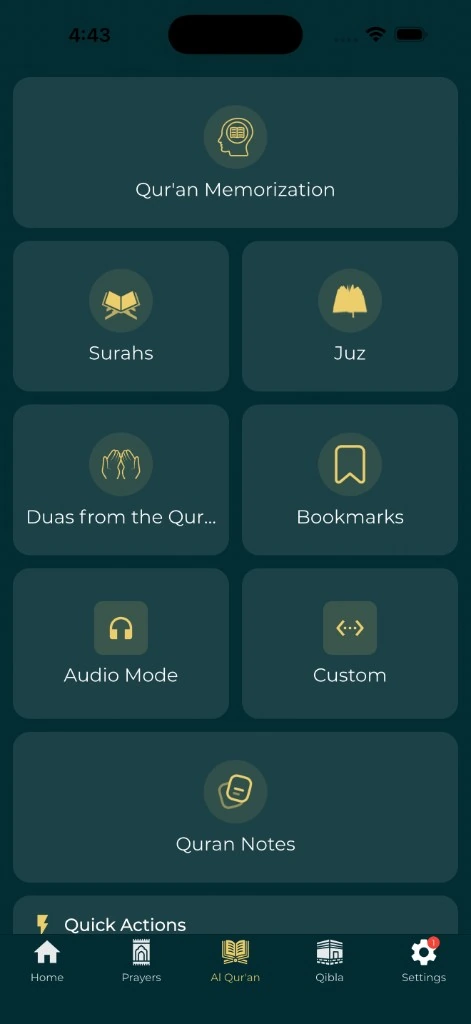
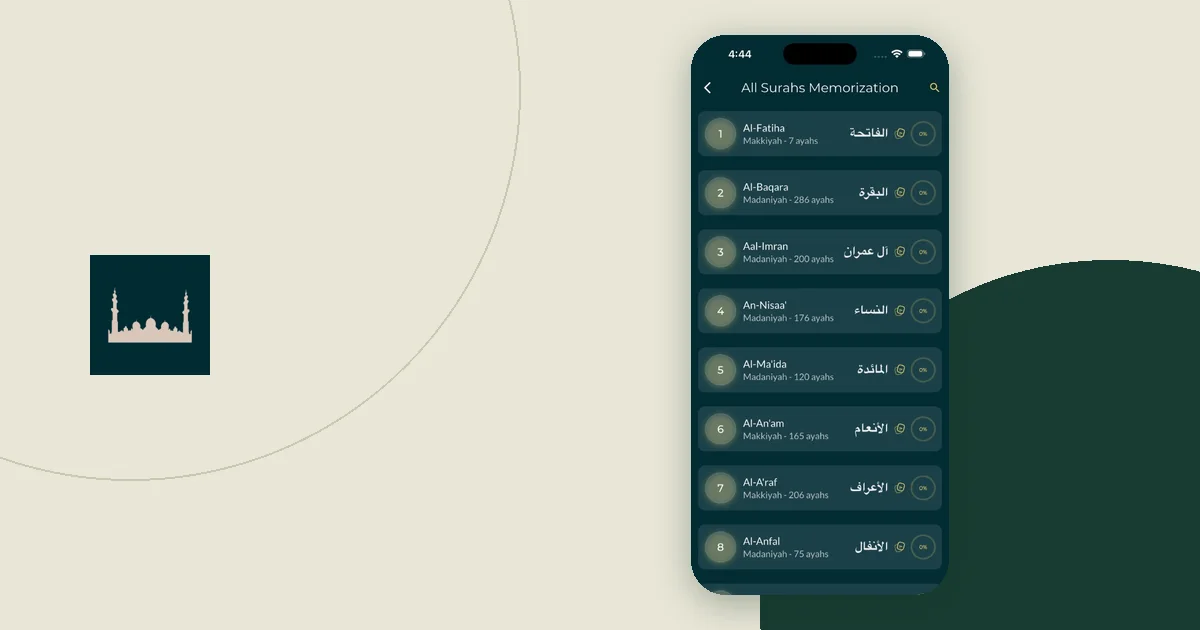
A paper sheet, a private note or the app can hold the queue. The Everyday Muslim Quran memorization tools keep lists of the ayahs and surahs you mark as memorized. The app does not schedule reviews for you or test your recitation, so keep the review dates in your own record.
For each passage, record five things:
| Field | What to write |
|---|---|
| Passage | Surah name and verse range |
| Last review | The date you actually checked it |
| What happened | Where recall or recitation slipped |
| Correction | Your teacher's specific note, if any |
| Next review | The date you plan to return |
Make "What happened" something you can act on. "Needed a prompt between verses 2 and 3" tells you what to practice. A score of "6/10" does not. Keep technical problems, such as audio that did not download, out of this column.
How to do one review
A review should be an honest check, not a reread. Follow the same four steps each time:
- Name the passage. Decide exactly what you are reviewing, such as Al-Asr, 103:1–3.
- Try recall first. Recite from memory before you open the text or play audio, if your teacher agrees this suits your level.
- Check. Compare your attempt with the text and your teacher's notes.
- Record. Write what happened and choose the next review date.
Keep two kinds of problem apart. Forgetting the next word is a memory problem. Saying a sound wrongly is a recitation problem. Guessing at a sound again and again will not fix it. Ask someone who can hear you and explain it.
Quran.com's Al-Mulk learning plan draws the same line. It says it focuses on memorization and meaning rather than formal tajwid teaching, and it encourages learners to review their recitation with someone knowledgeable. A review queue tells you when to return. It cannot judge your recitation. The guide on what a Quran app can and cannot teach about tajwid explains how to plan that teacher feedback.
Example: a two-week review queue
Illustration only. These dates show one way to space reviews for two short surahs. They are not religious instructions, and they are not a tested schedule. Quran.com lists 3 ayahs for Al-Asr and 4 ayahs for Al-Ikhlas.
Suppose a learner memorized Al-Ikhlas a month ago, and learned Al-Asr this week with a teacher correction on verse 3.
| Day | Passage | Result | Next review |
|---|---|---|---|
| 1 | Al-Asr 103:1–3 | Needed a prompt before verse 3 | Day 2 (still new) |
| 2 | Al-Asr 103:1–3 | Recalled; check teacher's note on 103:3 | Day 4 |
| 3 | Al-Ikhlas 112:1–4 | Recalled with no prompts | Day 10 |
| 4 | Al-Asr 103:1–3 | Recalled with no prompts | Day 8 |
| 8 | Al-Asr 103:1–3 | Teacher hears it at lesson; correction holds | Day 15 |
| 10 | Al-Ikhlas 112:1–4 | Hesitated at verse 3 | Day 12 |
| 12 | Al-Ikhlas 112:1–4 | Recalled with no prompts | Day 19 |
Look at the pattern. The gap gets longer after a clean recall and shorter after a slip. The new surah gets close reviews. The older one gets wider gaps, but it never leaves the queue.
Adjust the gaps with your teacher
Ask your teacher which passages need a close return and which can move further apart. Bring your queue to the lesson so the conversation is about real results.
Do not stretch every gap just because you are busy. First, ask whether to learn less new material, make each review shorter or plan fewer sessions. The guide to building a revision schedule before adding more helps you make that choice.
Restart after missed days
When several reviews are overdue, do not try to clear them all in one evening. Pick the passage that needs attention most. Review it, then spread the others over the next few days and write "rescheduled" beside them.
Suppose a learner comes back after a busy week and sees four overdue dates. Doing all four that night can make the plan feel impossible. Checking one short surah first, then rebuilding the queue, gives a fresh start that can last. The same idea appears in the guide to restarting a Quran reading plan after missed days.
Keep the history. A short note such as "rescheduled after a busy week" shows what happened without judging you.
Check whether the queue is helping
Every few weeks, ask one question: does the queue help you arrive at lessons with clearer questions? If filling it in takes longer than practicing, drop fields. If passages keep falling out of review, put the next review date somewhere you see it every day.
Keep the record private and share only what helps the lesson. The aim is steady return visits, with corrections carried forward.