Quran & learning
Build a Small Quran Reading Habit That Lasts
Start a small Quran reading habit: name the task, tie it to a daily cue, save a clear resume point, and review it after one week on iPhone or Android.
Editorial writing date:
Start with a session you can keep on an ordinary day. Decide when you will open the Quran, what you will do in that session, and where you will start next time. You can add more later, once a normal week shows you have room.
This fits a well-known teaching. In Sahih al-Bukhari 6464, the Prophet (ﷺ) said that the deed most beloved to Allah is the most regular and constant, "even if it were little." A small plan you return to is a better start than a large target your week cannot hold.
Key Takeaways
- Name one reading task for the session, such as reading Arabic or studying a translation.
- Tie the session to a moment that already happens every day.
- End each session by saving a surah and ayah reference for the next start.
- Review one ordinary week before you add pages or set a finish date.
Name the task before the amount
Pick what the session is for. You might read Arabic, study a translation of the meanings, listen to a reciter, or review a lesson. These tasks support each other. Still, your record stays clear when you know which one you did.
"Read from my saved place and write down one question" is a session you can start. "Do more Quran" is not, because it names neither a place nor a task. If you are still learning to read Arabic, ask your teacher which passages suit your level.
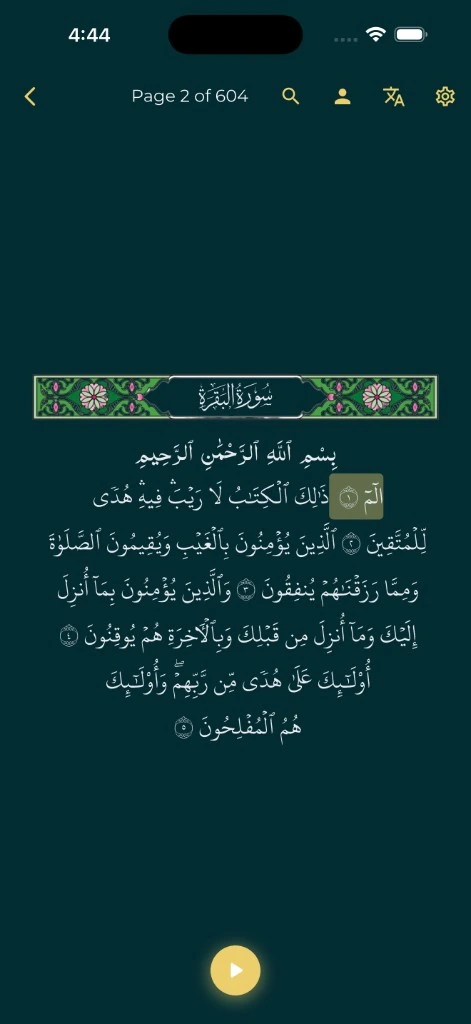
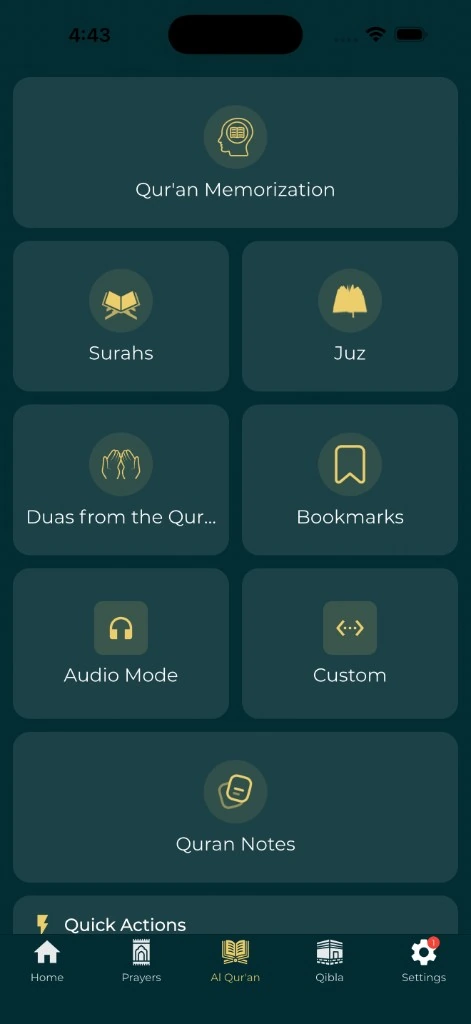
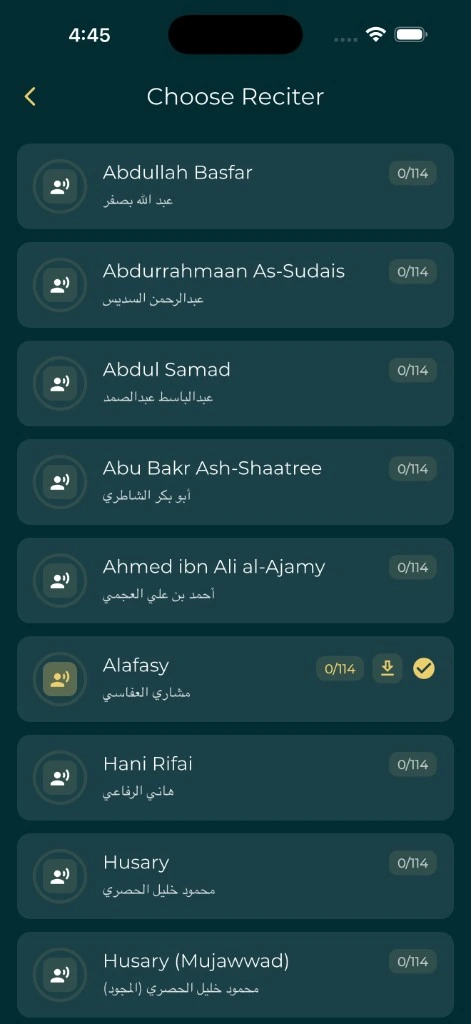
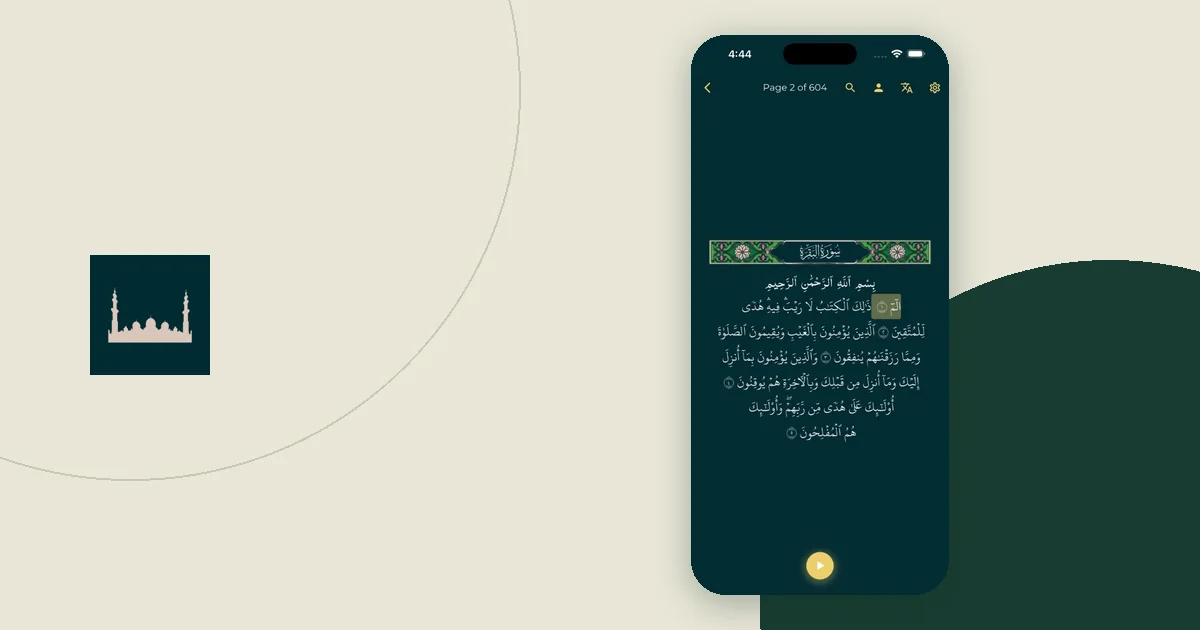
The Everyday Muslim Quran reader has translations, reciters, bookmarks and a saved reading position. Use only the tools your task needs. You do not have to try every setting before your first session.
Tie the session to a daily cue
Attach reading to something you already do. Good cues are fixed and easy to notice: after a set prayer, after the evening meal, or before you open your work laptop.
Then check what really happens at that time. If the gap after dinner is often taken by family needs, it is not a free slot. If your plan depends on a commute that changes, choose a backup time for those days.
A short plan line can hold all of this: "After Maghrib, at the desk, open my saved place and read." It names a cue, a place and a task. It is a planning suggestion, not a promise that one method suits everyone.
Make the phone easier to read and harder to interrupt
Small setup problems stop a habit quickly. Text that is too small and a message alert in the middle of an ayah are common examples. Fix them once, before the first week.
| Setup step | iPhone | Android |
|---|---|---|
| Larger system text | Settings > Accessibility > Display & Text Size > Larger Text (Apple guide) | Settings, then search for Font size (Android guide) |
| Quiet reading time | Settings > Focus, choose a Focus, then Add Schedule (Apple guide) | Settings > Modes > Do Not Disturb, or a timed rule on older versions (Android guide) |
| Quran text in the app | Qur'an Settings > Font Sizes, for Qur'an, translation and transliteration text | Same Qur'an Settings in the Android app |
Menu names can vary by phone maker and system version. The Qur'an font sizes are part of the Qur'an settings, so the rest of the app can stay at its normal size. The Font Sizes section is hidden while Mushaf View is selected, so switch to Ayah View or Page View to change it. The app customization guide covers the other display options.
Choose an amount that leaves room for care
Start smaller than you think you need. Save your place with a surah and ayah reference, especially if you switch between a phone and a printed mushaf, because page layouts differ.
Al-Muzzammil 73:4 calls for measured recitation. Do not let a self-chosen page target push you to rush words you are still learning. When you are unsure of a pronunciation or a stopping point, ask a teacher.
Worked example (an illustration, not a recommended pace). Suppose a reader picks two pages a day, five days a week, using the app's page view. The reader in Everyday Muslim numbers its pages 1 to 604, the same pagination the khatam planner uses for page targets. That is 2 × 5 = 10 pages a week. At that pace, one full reading would take 604 ÷ 10 = 60.4, or about 61 weeks. The reader does not need to commit to that date yet. The number simply shows what the chosen amount means in practice.
If the task often runs past the time you have, shrink the task or move the slot. A plan that only works when you skip the hard parts needs changing.
Give your questions a place to go
A short session will raise questions you cannot answer on the spot. Sad 38:29 speaks of reflecting on the Quran's verses. Writing a question down lets you reflect later without stopping the reading.
When you study a translation, note which one you used. Keep the verse reference with your question, and check it later with a reliable tafsir or a qualified teacher. Your first reaction is a starting point for study, not an explanation of the verse.
The guide to reading a Quran translation with context covers that study task. To keep questions tidy, use the Quran bookmark and note method, which separates resume points from study notes.
End every session with a resume point
Before you close the app, save where you will start next. Pick one meaning for your resume bookmark, such as "the first ayah I have not read yet," and keep it. A marker that sometimes means the last ayah read and sometimes the next one leaves you guessing.
A simple record can fit on a card:
| Record | Example entry |
|---|---|
| Next start | Al-Kahf 18:11 |
| Task | Arabic reading |
| Question | Meaning of a word in 18:9, to ask in class |
| Obstacle | Text too small at night; raised the Quran font size |
This is a sample format, not a scoring system. Paper works well if the phone distracts you. If you use bookmarks, tap the saved one once to check that it opens where you expect.
Review one real week before adding more
After seven ordinary days, look at what happened. Which sessions had enough time? Where did you lose your place? Did the cue work, or did a reminder arrive while you could not read?
Example review (illustrative). A reader planned five sessions and finished three. Two were missed on late workdays. The fix is not a bigger target. The reader moves those two days to a backup slot after Fajr and keeps the same two pages.
Fix the obstacle that makes returning hardest, then try another week. Once the routine holds, you can plan a khatam around your real week using the pace you saw. If you miss several days, the guide to restarting a Quran reading plan shows how to resume from a known place.
Your next step is concrete: open the Quran, go to the saved reference, and do the one task you chose.