Ramadan & fasting
Carry One Ramadan Habit Into the Rest of the Year
Pick one Ramadan habit, shrink it to fit an ordinary week, link it to a prayer cue on iPhone or Android, and restart honestly after missed days.
Editorial writing date:
Choose one thing you did in Ramadan and want to keep. Write it as a single action, make it small enough for your busiest ordinary week, and tie it to a cue you already have, such as a daily prayer. Keep the material one tap away. Decide now where you will restart after a missed day. You do not need to keep the whole Ramadan routine to keep one good part of it.
Key Takeaways
- Name one action you can picture, not a broad wish like "be more consistent."
- Size the habit for your busiest normal week, not for a quiet Ramadan evening.
- Use a prayer as a cue if it helps; the link is a planning choice, not a ruling.
- After a gap, restart from your real position and leave missed days blank.
Pick one action you can picture
Look back at Ramadan and pick the one practice you most want to keep. It might be reading Quran after Fajr, reviewing a dua you were learning, or working through questions from a class.
Then write it so a stranger would know what to do. "Read more Quran" is a wish. "Read two pages after Fajr from my last-read place" is an action. "Review the dua from week three, then check my pronunciation note" is too.
Sahih al-Bukhari 6464 reports that the deed most beloved to Allah is the most regular and constant, even if small. That supports choosing something modest you can repeat. It does not make any particular reminder time or app streak part of the practice itself.
Keep the practice and the planning tool apart
Al-Ahzab 33:41 tells believers to remember Allah often, and 33:42 to glorify Him morning and evening. A reminder can help you remember to do that. The reminder does not add wording, counts or rewards of its own.
If your habit is Quran study, Sahih al-Bukhari 5027 says the best people are those who learn the Quran and teach it. Keep a reliable copy and a teacher you can ask. A habit plan should never turn an open question into a settled answer just to keep moving.
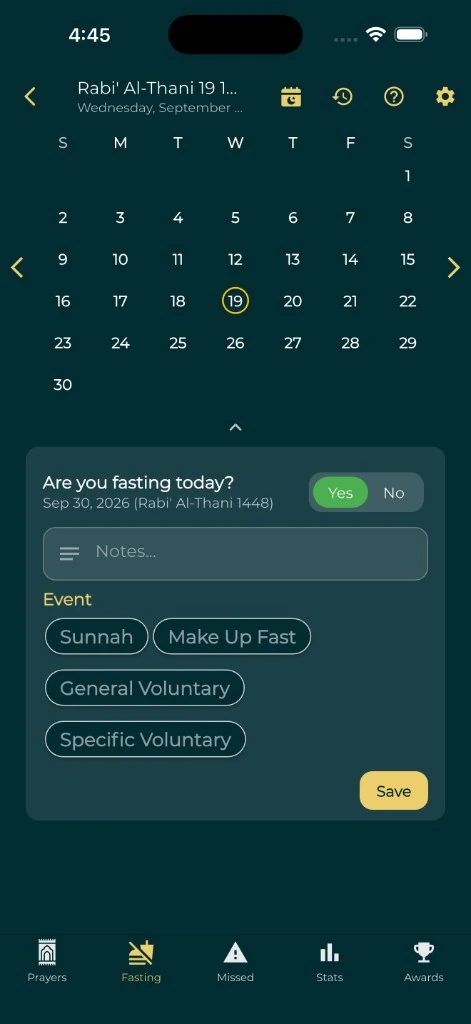
If the habit you want is fasting, Sahih Muslim 1164a encourages following Ramadan with six fasts in Shawwal. The fasting tracker can record Sunnah and make-up fasts with notes. Ask a qualified scholar about timing or about combining those fasts with make-up days; the app does not decide that.
Shrink it to fit an ordinary week
List what fills a normal week after Ramadan: work, study, care for others, travel, housework. Find the one slot that survives even your busiest week.
That slot may be smaller than the Ramadan version. That is fine. Use these questions to size it:
| Question | Your answer |
|---|---|
| What exactly will I do? | One action, written plainly |
| What do I need open? | A bookmark, a saved dua or a lesson note |
| What cue comes right before it? | A prayer or another fixed point in the day |
| What usually gets in the way? | One predictable obstacle |
| Where do I restart after a gap? | A saved position, not a catch-up count |
The small Quran habit guide helps if reading is your choice. For remembrance, see the morning and evening remembrance guide.
A worked example: two pages after Fajr
This is an illustration with an invented person, not a schedule to copy. In Ramadan, Bilal read about 20 minutes after Fajr most days. After Ramadan he starts work at 8:00, and some weeks an early meeting means leaving soon after Fajr. He keeps one part, small enough for an early-meeting morning: two pages after Fajr.
His setup, in the order he does it:
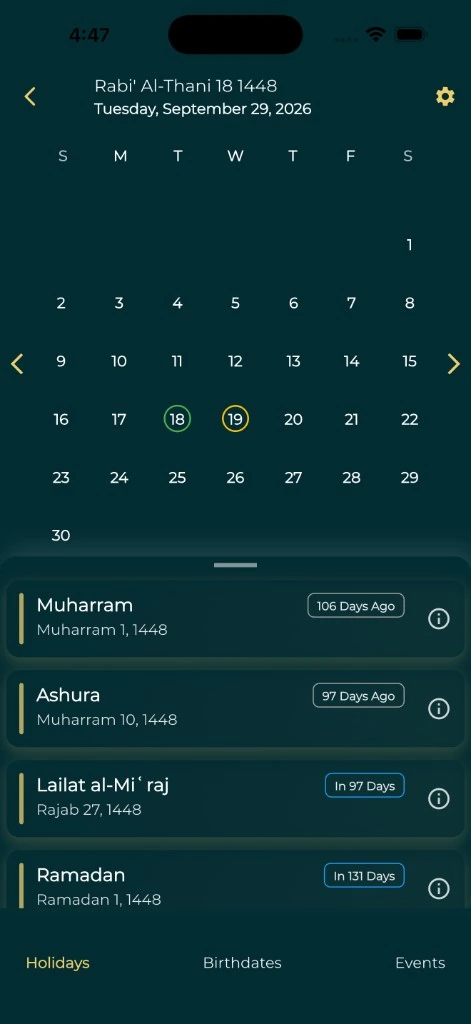
- Make the material one tap away. He adds the Quran last-read widget to his Home Screen. The prayer widgets page explains how: on iPhone, touch and hold the Home Screen and choose Edit, then Add Widget; on Android, touch and hold an empty area, open Widgets and find Everyday Muslim.
- Create the habit. In the Islamic habit tracker, he adds a habit named "Two pages after Fajr" with the description "Start from last-read. Questions go in my notes."
- Link it to one prayer. He links the habit to Fajr only. The feature page says the link gives a familiar point in the day; it does not set a religiously prescribed time.
- Write the restart rule. "If I miss days, I start from last-read. I do not double up."
| Day | What happened | Record |
|---|---|---|
| Mon | Read two pages after Fajr | Habit marked done |
| Tue | Read two pages after Fajr | Habit marked done |
| Wed | Early meeting; left for work straight after Fajr | Left blank |
| Thu | Read two pages, started from last-read | Habit marked done |
On Wednesday he did not mark the habit done to protect a streak, and he did not read four pages on Thursday to "make up." His Fajr prayer and his reading habit stay separate records, as the feature page advises. The blank day just tells him that early-meeting days are the obstacle to plan for.
Adjust the cue, not the record
If the same slot fails twice in a week, change something real. Move the habit to a different prayer, shrink it to one page, or put the material closer. You can edit a habit's description and prayer links later, and turn a habit off with its active switch while you rethink it.
Keep encouragement specific. If you ask a friend for support, say what helps, such as a talk about your learning questions instead of a daily report. If you use Khair Partners, the app's partner feature, check what each partner can see first. The worship goals without scores guide covers keeping charts from turning into comparisons.
Restart from where you are
After a gap of a day or a month, open the material at your saved place and do today's small action. Leave the missed days blank. If a slot keeps failing, change the cue or the size instead of filling in ticks.
The record can show you patterns, such as which time of day fails or which material is hard to find. It cannot measure the worth of your worship. Use it to make the next step clear, and take questions about worship itself to a qualified teacher.